2 min to read
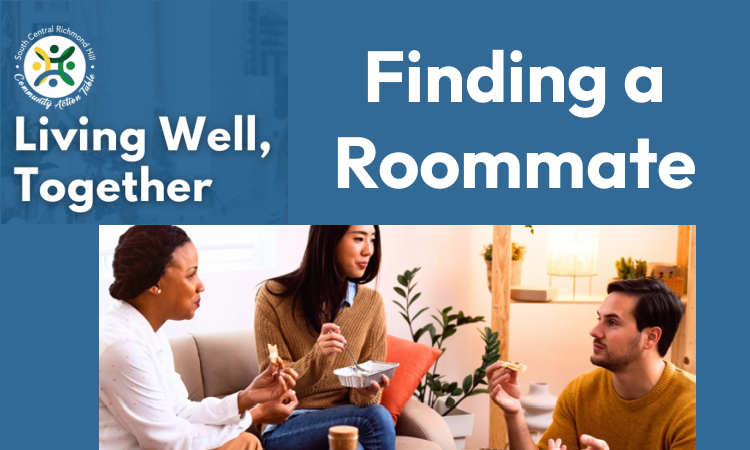
The Family Services of York Region has created a practical guide to finding and building respectful roommate connections.
Here are tips for safety, communication, and a great shared living experience:
Why have a roommate?
- Mutual support and shared responsibility
- Living Well, Together
- Reduce isolation, build community
- Save money on rent and utilities
What Makes a Good Roommate?
- Reliability – Pays rent on time and follows through on commitments.
- Respect & Cleanliness – Keeps shared spaces tidy and respects privacy.
- Good Communication – Open and clear about guests, noise, and bills.
- Consideration & Compatibility – Mindful of others’ schedules and lifestyle habits.
Where to Find a Roommate Safely?
- Word of mouth through friends, family, community centres, places of worship.
- Community organizations (Routes Property Pairing Program, CCSYR, and Welcome Centres).
- Online platforms such as Roomies.ca or Roomster (Please note: These are third‑party platforms. Use at your own discretion).
- Meet in public first, don’t share sensitive information too soon.
Legal Basics You Should Know
- If you do not share a kitchen or bathroom with your landlord, their immediate family, or a head tenant (the person you pay rent to), you are generally protected under the Residential Tenancies Act (RTA) and the Ontario Human Rights Code (OHRC).
- This means you have the same rights as other tenants, including rules on rent increases and the right to an eviction hearing at the Landlord and Tenant Board (LTB).
- To learn more about this, go to https://stepstojustice.ca/share-housing
- If you and your roommate(s) each have a separate lease with the landlord:
- You are only responsible for your own rent.
- The landlord must maintain common areas.
- The 24‑hour entry notice applies only to your unit, not to shared common spaces.
- If you and your roommate(s) are on the same lease with the landlord:
- Everyone on the lease may be jointly responsible for the full rent of the unit.
- You can create a roommate agreement to outline how rent, utilities and other fees are split. While not part of the RTA, these agreements may be enforceable in Small Claims Court.
- To learn more about tenants’ rights, visit https://housingrightscanada.com.
- A good roommate can make housing affordable and life more enjoyable.
- Take time to choose wisely, write things down, and reach out for support if you need it.
Warning Signs
- Unwilling to put anything in writing.
- Avoids talking about money, bills, or responsibilities.
- Disrespectful of privacy or boundaries.
- Requests sensitive info (health history, finances beyond rent/utilities).
Safety & Respect
- Schedule an in‑person meeting at a safe location, or a virtual meeting.
- Consider a simple roommate agreement (not always legally binding, but helpful).
- References are good to have.
- Protect sensitive information.
- Trust your instincts.
Community Resources & Support
- 360Kids (16–26 years old) [email protected] • (905) 475‑6694
- Catholic Community Services of York Region (CCSYR) [email protected] • (905) 770‑7040
- John Howard Society (JHSYR) [email protected] • (905) 895‑9943 ext. 500
- Richmond Hill Residents – The Housing Help Centre (THHC) [email protected] • (647) 241‑1237
- Routes Property Pairing Program [email protected] • (905) 722‑4616
- York Region Welcome Centres [email protected] • 1‑(877)‑761‑1155
- Low‑income Energy Assistance Program (LEAP) [email protected] • 1‑877‑632‑2727
- Ontario Electricity Support Program (OESP) [email protected] • 1‑(855)‑831‑8151
- The Homelessness Prevention Program (HPP) [email protected] • 1‑(877)‑464‑9675
- Canadian Mental Health Association (CMHA) Rentsmart pokonta@cmha‑yr.on.ca • 1‑(888)‑640‑1934
- York Region Housing Mediation Program (YRHMP) [email protected] • (905) 505‑2535