(Sambucus canadensis)
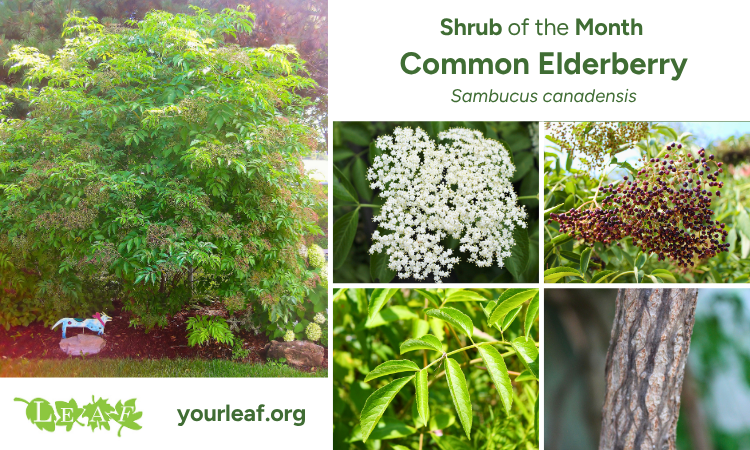
Common elderberry is a large, fast-growing native shrub valued for its showy flowers, nutritious berries and importance to wildlife.
Native to much of eastern and central North America, elderberry is commonly found along woodland edges, wetlands, stream banks and other moist areas. Its clusters of white flowers and dark purple-black berries bring seasonal interest to the landscape while providing food for birds, pollinators and other wildlife.
Quick Facts
Height: approximately 6 feet in urban settings
Spread: approximately 6 feet in urban settings
Form: woody, elliptical to rounded crown with upright, dense branching
Leaves: pinnately compound, bright green, long, narrow, oval leaflets with finely serrate edges; emerge in spring; yellow in fall
Flowers: large, white, fragrant, rounded, flat topped clusters; emerge in late spring/early summer
Fruit: tiny, dark purple to black, smooth, round, bitter clusters of drupes containing 3-5 small seeds per drupe; mature in late summer/early fall
Bark: smooth, yellowish-grey when young; hard, greyish-brown, ridged when mature
Distinguishing Feature
Common elderberry is easily recognized by its large, flat-topped clusters of white flowers followed by drooping clusters of dark purple berries. Its compound leaves and tall, multi-stemmed form also help distinguish it from many other native shrubs.
Why We Love It
Common elderberry is a wildlife-friendly shrub that packs a lot of value into a relatively small space. Its flowers provide nectar and pollen for a variety of pollinators, while its berries are an important food source for many birds and other wildlife. As a fast-growing, multi-stemmed shrub, elderberry can also provide cover and nesting habitat. It grows well in moist soils and is particularly well suited to naturalized areas, rain gardens and the edges of woodlands or wetlands.
Did You Know?
- Elderberry is an important source of food for birds during late summer and fall. Its abundant clusters of dark berries are especially valuable when many birds are preparing for or undertaking fall migration. Species such as cedar waxwings, thrushes, vireos, tanagers and grosbeaks feed on elderberries, with some migratory birds relying heavily on fruit during this time of year.
- Common elderberries have a long history of culinary use. Fully ripe berries can be cooked and used in jams, syrups, teas and other preparations. Avoid eating berries raw as they can cause digestive upset. Unripe berries should not be consumed.
- The red elderberry (Sambucus racemosa) looks similar in form, but its berries are bright red. Although loved by wildlife, these berries are considered toxic to humans and should be avoided.
- Elderberry has musical roots! Its stems contain a soft, easily removed pith that leaves them hollow, making them well suited for whistles, flutes and other simple wind instruments. Elder species have been used to make musical instruments in folk traditions on both sides of the Atlantic for centuries.
Plant Your Own!
Adding a common elderberry to your yard helps create a diverse urban forest, supports pollinators and birds and adds seasonal interest to your landscape. Plant for less with LEAF’s subsidized Shrub Planting Program today!
LEAF (Local Enhancement and Appreciation of Forests) is a not-for-profit organization dedicated to the protection and improvement of urban forests. We envision vibrant communities where everyone benefits from a healthy urban forest. For over 30 years we have been connecting people with nature through education, planting and stewardship.